How to open an online clothing store: sizes, photos, exchanges and seasons
8 steps for a clothing store: business model, size chart, variants with stock, photos, filters for search, instalments and exchanges, seasonal sales, first buyers.
Команда TRUNLY3 min read

Clothing is one of the most popular niches for online retail in Ukraine — and one of the hardest: sizes, colours, exchanges, seasonality. The good news is that most problems are solved by setting up the store before launch. Here’s what to do so you don’t drown in exchanges and “do you have it in M?”.
Step 1. Choose a business model
- Your own production or brand — the highest margin and uniqueness, but you need photos, patterns and a warehouse.
- Buying from a supplier — a faster start, but price competition with marketplaces.
- Dropshipping — no warehouse, but less control over quality and timing. Interest in it in Ukraine has dropped noticeably in recent years.
Step 2. A size chart — before your first product
Size exchanges are the main cost in a clothing store: every exchange means two deliveries. Prepare a size chart with real measurements (chest, waist, length) for each type of garment and publish it as a separate page. Link to it in every product description, with a tip like “runs small, take one size up”.
Step 3. Products with variants
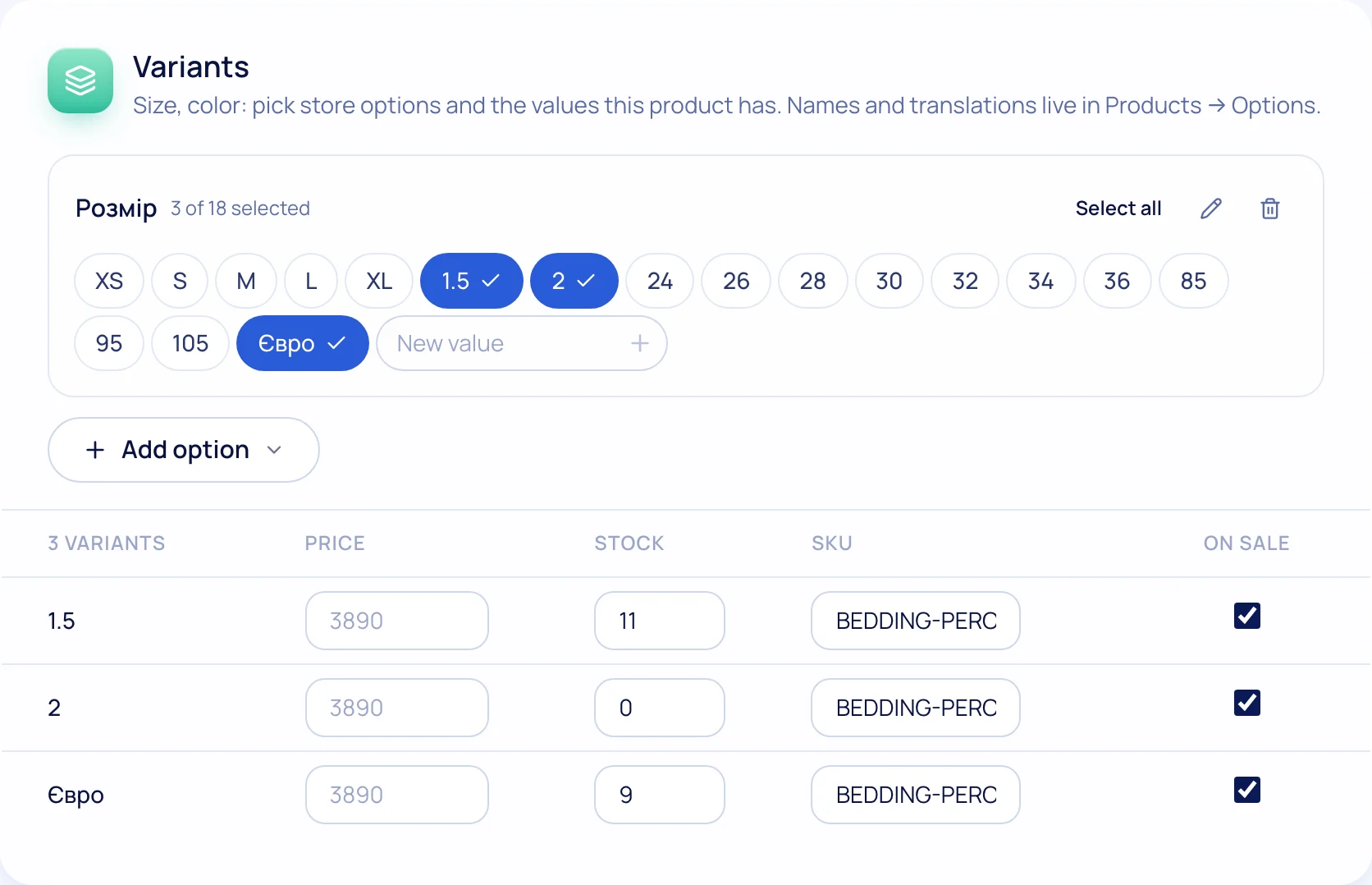
One model is one product, and sizes and colours are variants with their own stock and photos. Then the buyer sees that M in black is sold out but available in olive — and you don’t sell what you don’t have.
Step 4. Photos that sell
- on a model and as a flat lay;
- details: fabric, seams, fittings;
- separate photos for each colour;
- the same lighting and background on all product pages — the catalog looks consistent.
Step 5. Filters and pages for search
Buyers filter by size, colour, fabric and season. The same attributes give you pages for search queries: “linen dresses”, “women’s puffer jackets”, “oversized hoodies”. Each one is a separate URL with a title and a short text.
Step 6. Instalments and exchanges
For a coat, puffer jacket or suit, instalments noticeably remove the price barrier. Write exchange and return terms in plain words and link to them at checkout. Handle a size exchange as a new order from the customer’s card — with a Nova Poshta waybill in one click.
Step 7. Seasons and sales
Clothing lives by seasons: a new collection, a sale, pre-orders. Prepare collection banners and a sale countdown in advance, and sell last season’s leftovers as “complete the look for less” bundles.
Step 8. Where to find your first buyers
- Instagram and TikTok — outfits, try-ons, “how to wear”;
- Google Merchant Center — products in Google Shopping;
- marketplaces — as an extra channel via feeds;
- newsletters and “notify me when my size is back” — for repeat sales.
The general launch plan (sole proprietor registration, PRRO, delivery) is in “How to open an online store in Ukraine”. Features for clothing stores are on the “Online clothing store” page.
Questions and answers
How do I reduce size exchanges?
A size chart with real measurements for each type of garment, a link to it on every product and hints like “runs small / runs large”.
How should I set up sizes and colours?
As variants of one product with separate stock and photos — then the buyer sees what’s available.
Should a clothing store offer instalments?
For coats, puffer jackets and suits — yes: a monthly payment removes the price barrier.